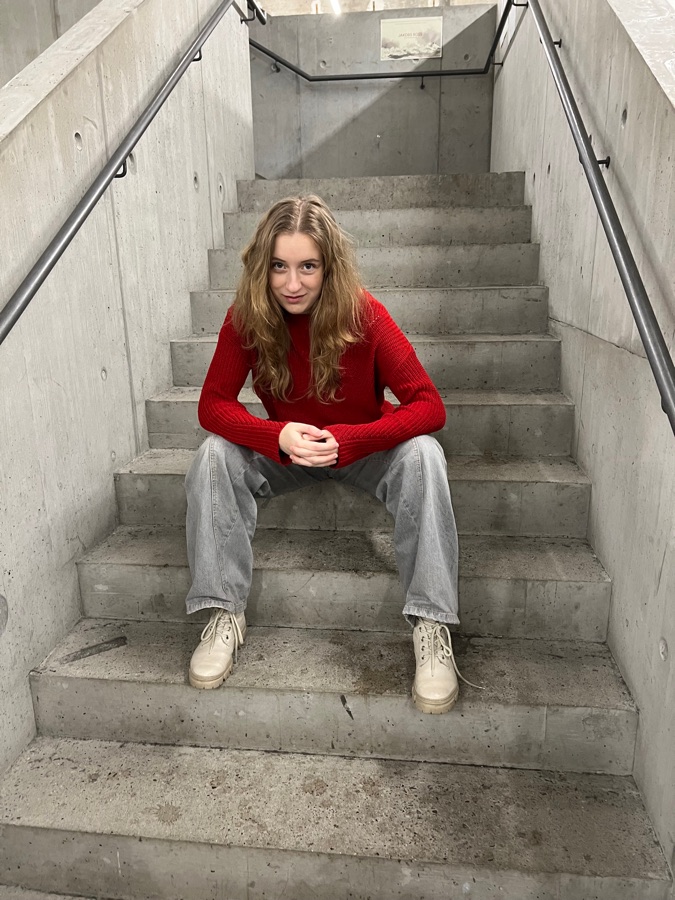
Die Treppe ist genormt in Berlin. Photo: PR archive
Patrícia Rotterová
Patrícia Rotterová is a theatre director based in Bratislava, a graduate of the Academy of Performing Arts in Bratislava (VŠMU). Her work spans original and classical dramaturgy, with a focus on contemporary themes and experimental forms of stage storytelling. During her studies she completed an Erasmus study exchange at the Hochschule für Schauspielkunst Ernst Busch in Berlin and an international placement at Staatstheater Stuttgart on Hamlet (Burkhard C. Kosminski). She also completed placements as assistant director in Bratislava, at the Slovak National Theatre on Rhinoceros (Júlia Rázusová) and at Aréna Theatre on The Scottish Play (Roman Polák).
During her studies her productions were shown at Slovak-wide and international theatre festivals - professional, student, and amateur - including Dotyky a spojenia, Istropolitana, Encounter, and Belopotockého Mikuláš, and with the production This Room Cannot Be Eaten she was also a guest at the Literary Festival in Kežmarok.
In the 2026/2027 season she is preparing her own directing work at the Slovak National Theatre - the production Pendleri (Commuters), based on the novel by Tamara Šimončíková Heribanová, whose premiere is planned for spring 2027 in the Blue Salon of the New Building of the SND. Her productions Red Pill Society (Štúdio 12) and Three Sisters, transposed from the chamber stage in the former air raid shelter in the theatre basement to the main stage of the Pavol Országh Hviezdoslav Theatre (DPOH), remain in the repertoire.
With her directing debut at DPOH - Three Sisters - she became, at 25, the youngest director staged by the theatre. With Commuters, she is also among the youngest directors to stage a full drama production at the Slovak National Theatre.
She regularly works in a dramaturgical tandem with Katarína Jungová; through reinterpretations of world classics as well as her own original work, they keep returning to questions of feminism, national memory, and power - above all, to who stays and who leaves, and what mark the experience of power we’ve been subjected to leaves on us. Reinterpretation is her key creative principle - a way of letting the original text speak into the present.
More about the directed productions